Slows
digestion

GLP-1 slows gastric emptying, helping you feel fuller longer after meals

A once-weekly dual GIP and GLP-1 option that may be considered after a licensed provider reviews your health history, current medications, goals, and individual needs.



Eligibility varies. Prescriptions are not guaranteed. Results vary.
Tirzepatide is a dual GIP and GLP-1 receptor agonist that may be discussed as part of a provider-guided weight-management consultation. Whether it is appropriate depends on an individual review of your health history, current medications, goals, and potential risks.
Prime Point begins with a medical intake and licensed-provider evaluation. If prescribed, the provider will explain the recommended plan, limitations, follow-up, and next steps. Tirzepatide is not appropriate for everyone, prescriptions are not guaranteed, and results vary.
Tirzepatide and Semaglutide are different medications with different mechanisms, considerations, and potential risks. Tirzepatide acts on both GIP and GLP-1 receptors, while Semaglutide acts on GLP-1 receptors.
A licensed provider can review your medical history, current medications, goals, and questions before discussing whether either option may be clinically appropriate. The consultation does not guarantee eligibility or a prescription.

GLP-1 is a naturally occurring hormone involved in blood-sugar regulation, digestion, and appetite signaling. After eating, it helps the body coordinate several processes related to glucose and fullness.
Tirzepatide is a dual GIP and GLP-1 receptor agonist. When clinically appropriate and prescribed, it acts at both GIP and GLP-1 receptors and may influence appetite signaling and how quickly the stomach empties.
Individual response, tolerability, and potential side effects vary. A licensed provider should review your health history, medications, goals, and risks before discussing whether Tirzepatide may be appropriate.
Experiences differ, and these effects are not guaranteed.
GLP-1 slows gastric emptying, helping you feel fuller longer after meals

It balances hunger signals in the brain, reducing cravings and overeating

Tirzepatide stabilizes blood glucose levels, improving metabolic control and reducing spikes


Our U.S.-based 503A pharmacy partners compound active ingredients into medications for individual patients. These pharmacies are state-licensed and subject to FDA oversight.

We have personally vetted all pharmacy partners' compounding practices including how they test for potency, sterility, and endotoxins. We have thoughtfully chosen the highest quality pharmacies to provide medication to our patients.
When your clinician prescribes a compounded medication for you, our pharmacy partner prepares it to order in the formulation and strength specified on your prescription.

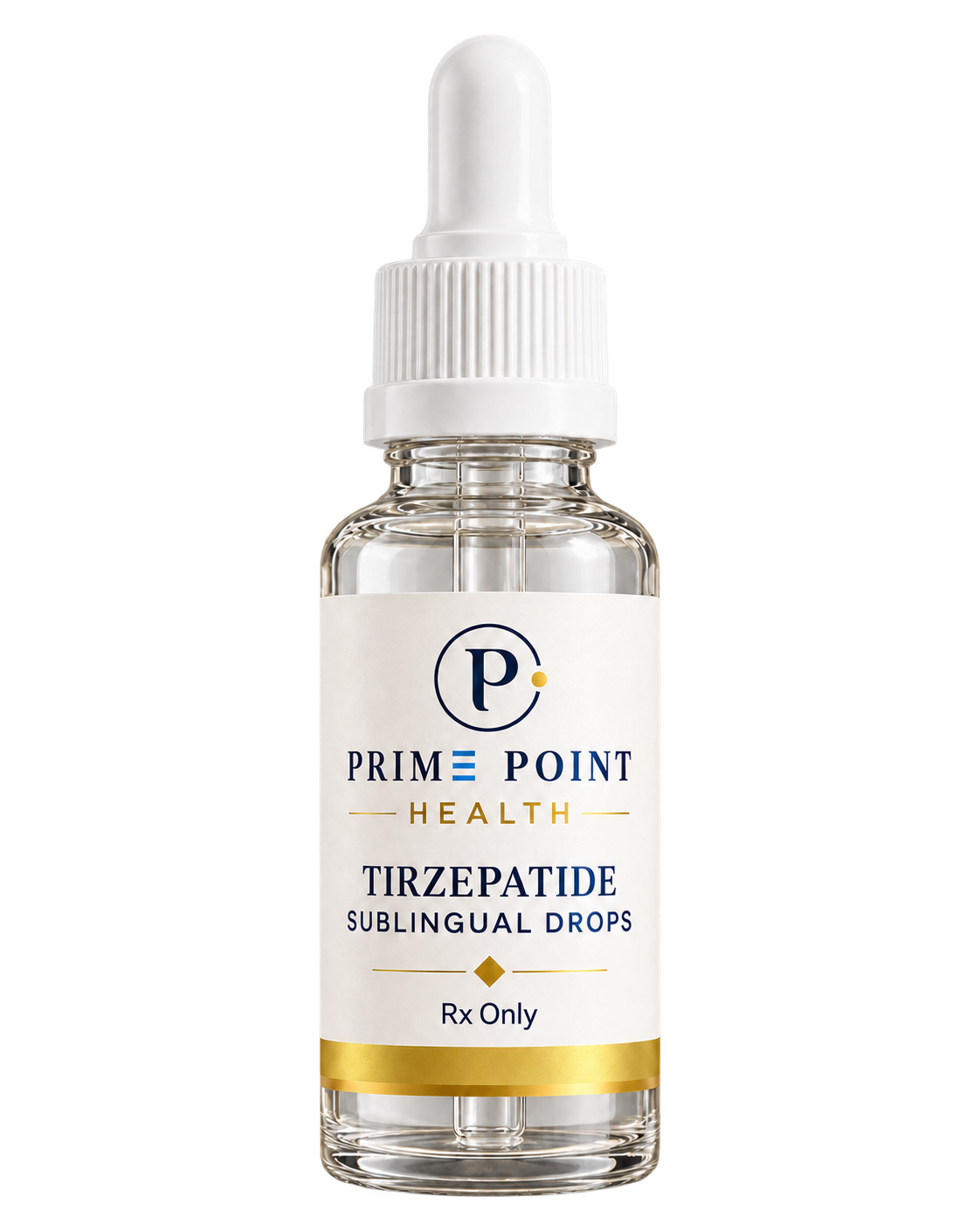
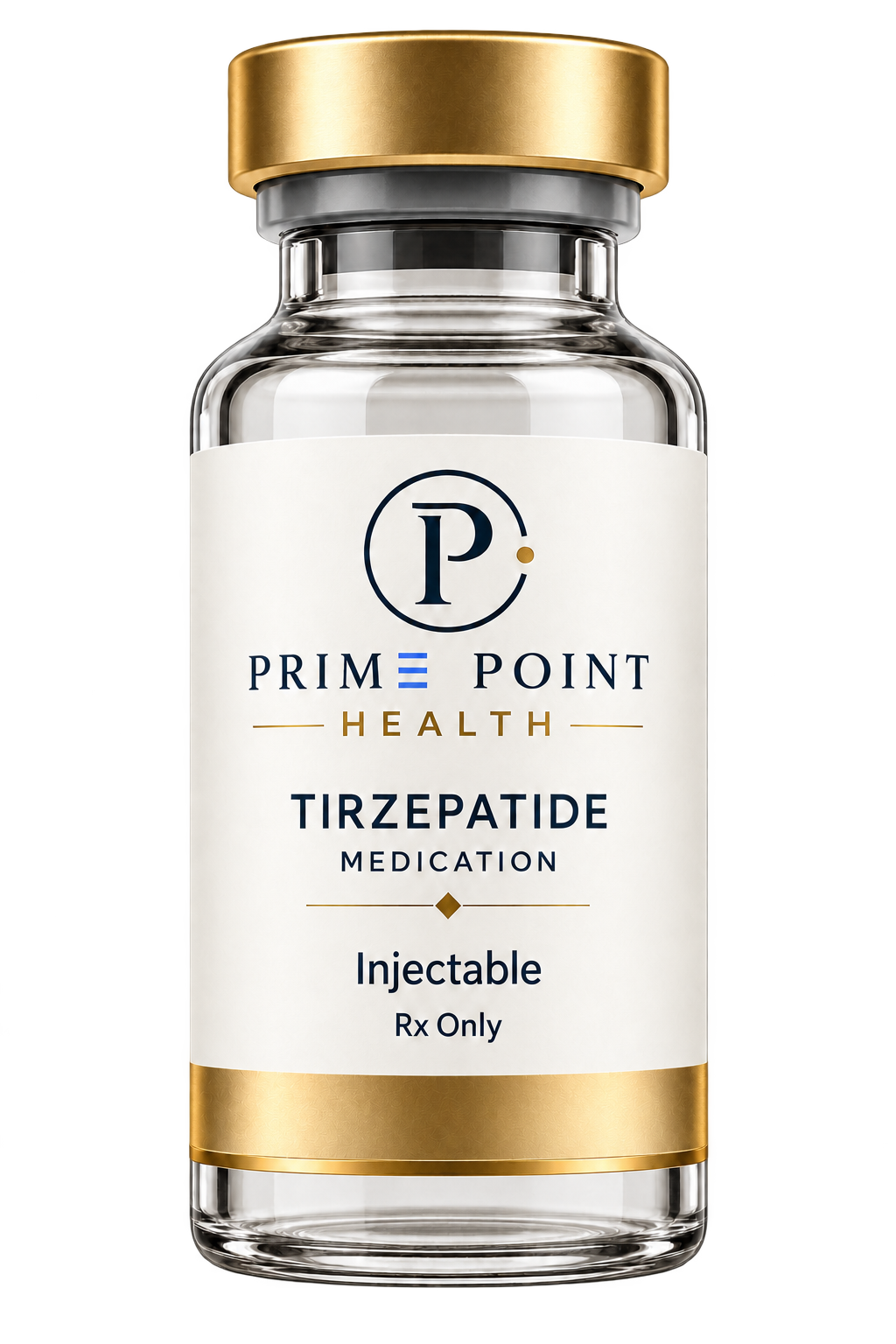
Prime Point supports a sustainable, flexible approach to nutrition rather than an unnecessarily restrictive diet. Your provider may discuss nourishing food choices, adequate protein, hydration, meal size, and eating patterns based on your goals, health history, and how you tolerate treatment.
Individual needs differ. Avoid making major dietary changes or beginning a highly restrictive eating plan solely because of Tirzepatide without first discussing it with your care team.
Possible side effects may include:
Side effects and their severity vary, and other risks may be serious. Contact your healthcare professional if symptoms persist, worsen, or concern you, and seek urgent care for severe symptoms. Review the prescribing information and discuss your health history and questions with a licensed provider.
Experiences after stopping Tirzepatide vary. Some people may notice changes in appetite, food cravings, blood-sugar patterns, or weight, while others may have a different experience.
Do not stop abruptly, taper, or change your dose on your own. Work with your licensed provider to discuss why you are considering stopping, whether a change is appropriate, and how your health and wellness plan should be monitored.
Tirzepatide injection is generally administered subcutaneously once a week when prescribed. Your clinician and dispensing pharmacy should provide the exact dose, schedule, storage guidance, injection-site instructions, and administration training for your prescription.
Follow those instructions carefully. Do not share medication or supplies, and do not change the dose or frequency unless your licensed provider directs you to do so.